Posted by Rachel on January 9, 2012 in
anecdote,
animals,
writing |
∞
I have a confession. I love school. I love learning. Now that I am (possibly…maybe…at the least, currently) through with my education I feel it’s an appropriate time for this admission. Now, just like everyone else I had a favorite subject. Three guesses what it was, and the first two don’t count. Yup, English. Fourth grade, when I was nine, was definitely the year this became a solid fact.
My teacher, Mrs. Kirby, would gather her gaggle of rambunctious students in a circle on a tattered rug and read Roald Dahl stories. There were others: Bridge to Terabithia and Where the Red Fern Grows, but Dahl’s stories were a memorable staple. While other children picked at their scabs or fell asleep against the blue bean-bag chair, I was engulfed in every word. I didn’t want the stories to end. And when the chapter came to a close, I could almost hear the film reel in my head clicking off.
It came as a natural next-step to start writing my own stories. We were assigned vocab-related short stories to complete each Wednesday that I penned with fervor. As an additional means of enticing the class to write, Mrs. Kirby gave the opportunity to write a poem. Not only would it be shared with the class, but it would be published in a book for New England’s Young Writers. As far as nine year-old me was concerned, she had me at published.
On the ride home from school, I fumbled together some animals (surprise, surprise) and rhyming words to create my masterpiece. It lay on the page as the quintessential depiction of spring time. I would love to share the piece with you, but alas, it has disappeared into the depths of my bookcase. I recall bees and trees, spring and a bird’s wing, many flowers and hours. It was my grand entrance to poetry. Thank goodness I’ve since chosen fiction.
Posted by Rachel on January 5, 2012 in
cliches,
ending,
how-to,
opening,
structure,
writing tips |
∞
Hoist anchor! There’s a reader on the line! Sure, the middle of your novel may be grand, but without a hook to catch readers, they’ll swim off to another, tastier story. There are plenty of books on the shelf as it is. OK. Enough with the finishing metaphor. My point is, if the opening of your story is bland, readers can only assume the rest will be too. Make it exciting. This rule holds true for the ending as well. What’s worse than reading a good book and it ending in the most predictable manner possible? Here’s a few simple do’s and don’ts to avoid a lackluster start and finish.
Do Use:
Action: As the saying says in the title: A Bang! Riveting action not only attracts readers to a story, but simultaneously leaves them wanting more. More is good.
Dramatic Dialogue: Plain dialogue won’t do. People don’t want to take part in mundane conversations, let alone read them. Be sure to use dialogue that is right in the thick of things.
Flashback / Flashforward: Timeskips can work wonders. Unless you say the time is different, readers won’t know you’ve employed this technique. It’s up to you, but I’m partial to keeping them guessing.
Symmetry: This is something that can be coupled with any of the other methods. I adore stories that have an equal weight about them. Whether it’s a cyclical or mirrored narrative, it works.
Don’t Use:
Prologue/Epilogue: Some people swear by these. But I can’t find a literary device I detest more. If it belongs in the story, it doesn’t need external bookends. That is all.
Clichés: Please don’t start or end your novel with a cliché. Just don’t do it. See my previous rant as to why.
Description: You have an entire book to describe what’s happening. Make the reader’s entry and exit a thrill, not a bore.
Give-aways: Under no circumstances should you give-away important information too early or too late. Too early and you can kiss readers goodbye. Too late? Well they’ve already left.
With all that said, I hope you remember the golden rule: Keep it exciting. Oh and one more thing. This is easily the most important fact. Never. Ever—
Oh, reader on the line. Hang on.
Posted by Rachel on January 2, 2012 in
characters,
plot,
review |
∞
Caution: Spoilers!
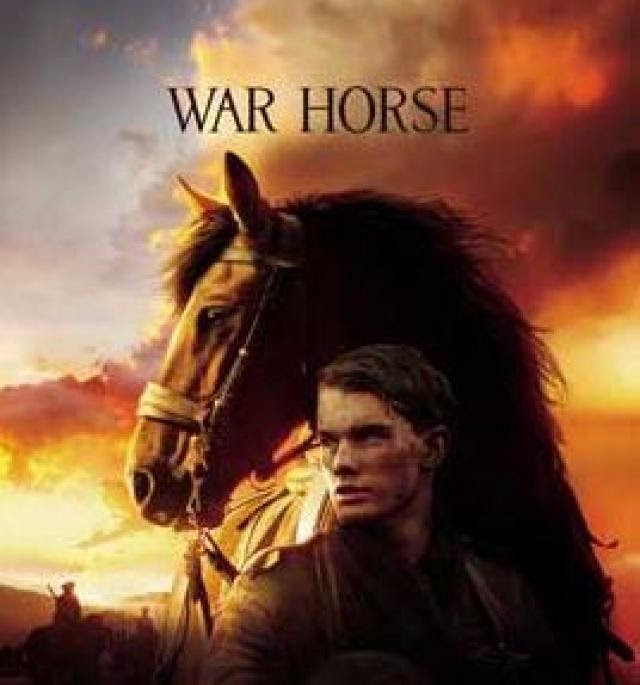
Think War Horse is another silly animal movie? Wrong. Panning shots of the English countryside set the backdrop for a colt’s birth and eases viewers into the vast world that surrounds us all as we are welcomed into life. Young Albert Narracott and his equine counterpart, Joey, train each other in the disciplines of friendship and willpower as War Horse gets off on the right hoof.
The call of “War” inevitably tears the pair apart as they must navigate through the horrors of World War 1 in parallel journeys. This type of interwoven narrative shows the gradual development of characters in addition to creating a side-by-side comparison of what Albert and Joey will overcome to be together again. As a film geared towards the younger crowd, flagrant gore is avoided with artful suggestions of the tragedy at hand but beautifully achieves the sense of dread and helplessness indicative of war.
Certainly, the most unexpected aspect of War Horse is the lives Joey touches. From British and German soldiers to French patriots, Joey proves himself a loyal, remarkable horse capable of anything he puts his mind to. My only complaint about the film is that the German’s and French speak in accented English as opposed to their native tongues. Note: the troublesome drawback of subtitles is not lost on me. One of the finer points of the journey is the passage of Mr. Narracott’s service pennant. Not only does the banner function as a means of keeping track of Joey, but it also symbolizes the courage of each of its recipients.
 My favorite moment* came in the trenches. Terrified, Joey has entangled himself in the barbed wire of no-man’s land. Lacking any source of optimism, the survival of the war horse perks the hopes of soldiers on either side of the battle. Joining forces to save Joey, a German and an Englishman cut him free. This poignant scene shows the common bond of man and our compassion for others, even animals, in a time of great struggle.
From the start of Albert and Joey’s reunion, I became a human faucet. The boys have matured into men. This notion only emphasizes the heartwarming call from Albert, in what should have been Joey’s final moments. The ending scenes of the film mirror the opening brilliantly and bring a well plotted and developed story to a close.
The simple fact that I saw this movie with my parents and pre-teen brother vouches for the movie’s accessibility across generations. After all, War Horse is timeless. The bond between human and pet tends to transcends into a connection akin to family. And after all Joey and Albert experienced together and apart, it’s no wonder there wasn’t a dry eye in the theatre during the credits. Verdict: A.
*Yes, I loved the scene between the soldiers as it dealt with Joey. My true favorite moment was when Colin (the Englishman) says to Peter (the German) “You speak good English.” To which Peter replies, “No, I speak English well.” As a beloved, nerdy scientist often proclaims, BAZINGA!
Posted by Rachel on December 30, 2011 in
guest post,
voice,
writing |
∞
Many thanks to Jennifer Willis for this wonderful guest post about the individuality of a writer’s voice and its ever-evolving nature!
One of the nice things about writing is the more you do it, generally the better you get at it.
When I wrote my first novel — “rhythm” — ten years ago, I was scared out of my wits. Forget about simply trying to get through a first draft and come up with a cohesive story; I was worried about my prose being clever and literary enough. I fretted over “show vs. tell” and how much exposition to include at what points in the book. Mostly, though I wanted the story to leap off the page with confidence and inspiration. Many readers today still give positive feedback on my first published fiction effort but when I read back over it, all I see is the fear and uncertainty I felt.
I was born to be a writer, as much as anyone else ever has been, but I still wasn’t sure that I had a right to write. Why did my book deserve to be read over someone else’s? What if I was discovered to be the fraud and poser that I feared I secretly was?
Every writer anguishes over this kind of crap. Not just new writers, but even established and celebrated authors at the height of their craft. I don’t want to revel in this angst as some kind of inherent rite of passage — because it isn’t fun and I’d rather spend my time writing or reading or even belly dancing than worrying about whether I’m good enough — but it is something that seems to plague us all at one time or another.
When I look over my latest novel — “Valhalla,” released in April 2011 — it’s hard for me to imagine that this work came from the same author. My writing style is less literary and more punchy. There’s more humor and even a bit of snark. Part of this came about because I’m somewhat less anxious over whether or not I deserve to be a writer. Mostly, though, this evolved simply over the course of writing more — not just fiction or journalism, but lots of personal email and letters to family and friends. It was when I looked into my personal correspondence and journal entries that I saw my true “writer’s personality” emerging. Instead of trying to impress some faceless, nameless reader to whom I had no real connection, I imagined that I was writing my stories for my best friends to read and enjoy.
If you’ve read Stephen King’s insightful “On Writing,” you’ll recognize this in his advice to write only for your “ideal reader.” That’s pretty much how I learned to be less rigid and fearful in my own fiction. I found myself including details that I knew would make my sister smile, or slipping in a few asides that would be sure to make my friends laugh.
A writer’s voice develops over time. If you look back at your favorite writer’s early works, you’ll often see the seeds of his/her later personality being planted, but it’s often not until much later that the full-bodied voice and tone take command and become one with the story. For me, this means that even though I’m more comfortable with my own distinctive writing voice today, I know that I will continue to grow into myself as time goes on. The only real requirement is that I keep on writing.
Guest Poster Bio: Jennifer Willis is an author and freelance journalist in Portland, Oregon. Her articles and essays have appeared in The Oregonian, Salon.com, The Christian Science Monitor, The Writer and other electronic and print publications, and her novels — “rhythm” and “Valhalla” — are currently available both as ebooks and in print. She can be found online at jennifer-willis.com
 My favorite moment* came in the trenches. Terrified, Joey has entangled himself in the barbed wire of no-man’s land. Lacking any source of optimism, the survival of the war horse perks the hopes of soldiers on either side of the battle. Joining forces to save Joey, a German and an Englishman cut him free. This poignant scene shows the common bond of man and our compassion for others, even animals, in a time of great struggle.


